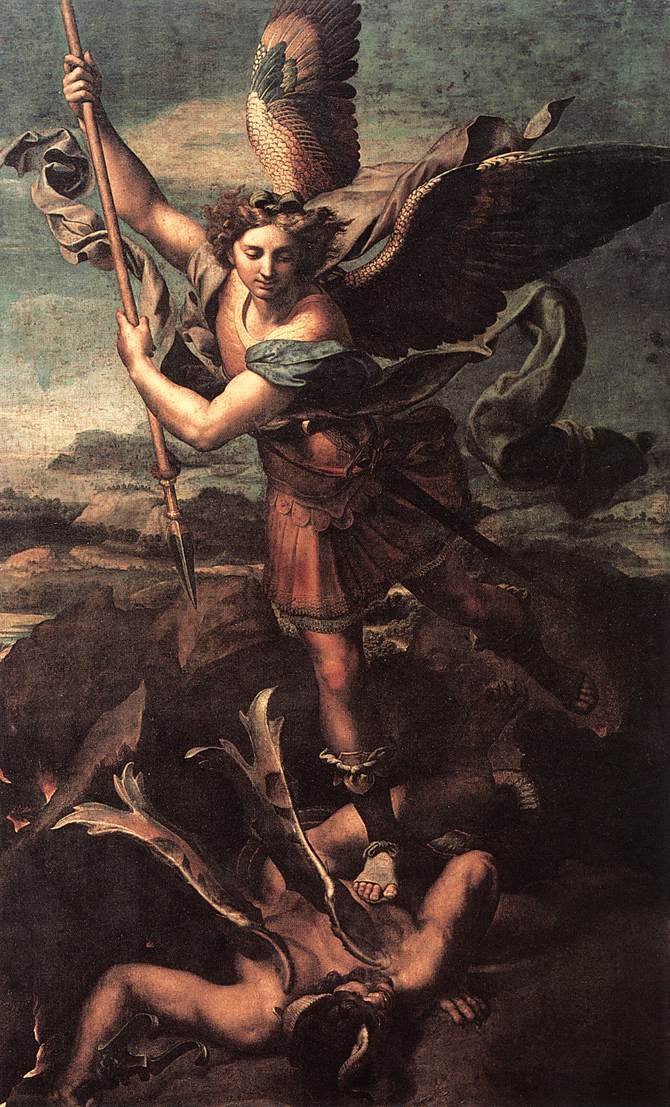
 Although I mentioned some aspects of demonology vampire in previous posts, today I am going to focus a of the most fascinating of the Middle Ages, demonology centered on the belief in the devil as the source of all evils that can not be explained from a rational point of view. When and how it arises demonology, What or who is the devil?, What is its origin?
 Society of the Middle Ages was characterized by a strong sacralization of everyday life, any activity was influenced by the religious, ecclesiastical rules derived from leisure time to the birth of a child or death of an individual . But along with the realization that divinity was present in every moment of daily life, there are also a belief progressive in the devil, in his constant presence beside the men to make them fall into sin and drag them to eternal damnation.
This belief in the devil is spreading in Europe from the eleventh and twelfth centuries, but it will be in the fourteenth century, according to the profound reform movements of the church and in the midst of the bloody wars of religion, when came to the process of demonization of the world when demonology (asserting the existence of the devil) became demonolatría (devil worship). Will be in the XIV and XV when treaties of demonology flood Europe publications in Germany in the second half of the sixteenth century surpassed 230.ooo copies, and in France, in the same period appeared a multitude of writers testified to the immense power of the devil, including prominent figures such as J. Bodin and A. Paré.
Thus the devil was a real obsession for men and women of the Middle Ages and modern times. The devil was the reference point that came to explain everything that lacked a rational explanation from adverse weather conditions causing wrecks and destroyed crops to disease and suffering of children born with physical deformities. The image of the devil was associated with animals such as goats, frogs, black pigs, wolves and cats and grim-looking human figures and grotesque features, images supplied by the descriptions of preachers and theologians who fed the popular imagination and inspiration of the artists that shaped this imaginary plastic. But what or who is the devil? The successive
translations of the Old and New Testament made in the ancient world, the transcription of the Aramaic words in Hebrew, Greek and then into Latin were some variations. The ultimate enemy of the Christian God was called first with the Hebrew word "Satan" and later with the Greek word "diabolos", until eventually both ended equated words and spread the use of the term "devil or demon" to refer not only Satan but also their acolytes in reference to any cause be wrong. Is this name "devil or demon" that is used at the Council of Toledo (siglo V) to legalize the religious concept of the personification of evil.
According to Christian tradition, demons are spiritual beings created by God who rebelled against his creator through sin, but what sin? Traditionally have been considered four hypotheses to explain the sin of Satan: First, according to a widespread theory in the early years of Christianity apocryphal text 's book guards, is given a sexual sin committed with Lilith laying breed monsters and demons. A second version, passed in another apocryphal work, The Life of Adam and Eve implies a sin of disobedience that transformed several angels into demons, which is the version that then pick up the Koran. A third assumption made by church fathers like Hildebrand, Albertus Magnus and Duns Scotus maintains that Satan was the angel most beautiful creation that led him to commit an act of pride before God. Finally, Aquinas maintains the thesis of the sin of pride as which the angel he believed to be equal with God committed a sin so great that God punished him and all the other angels who had believed him turning into demons.
The truth is that whatever the sin committed by the fallen angel, some of the questions that were formulated medieval man how many demons in the world?, What are their powers, where will you live?, " why men dominate the form of possessions?, what role they play in cases of witchcraft? These and other questions will try to respond in subsequent entries.


0 comments:
Post a Comment