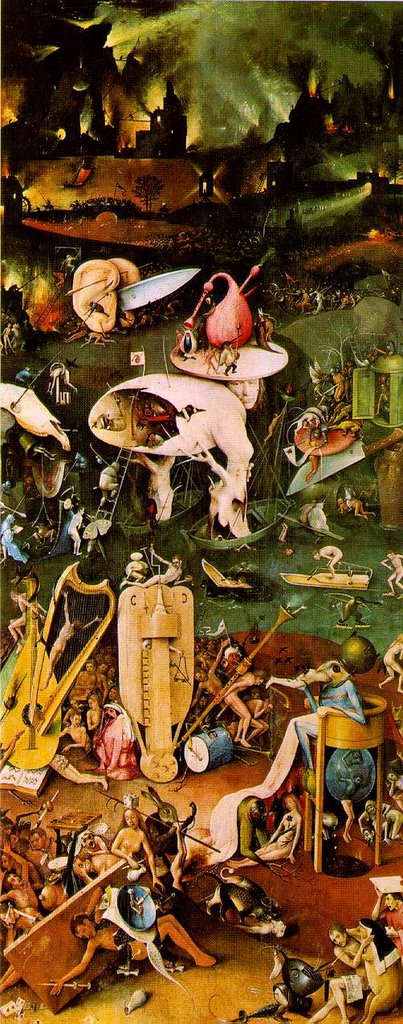
 In this new post I will focus on eschatology, from the Greek word "eschatos", which refers to a set of beliefs concerning the end of the world and human existence, one of the major themes present in all religions and deeply rooted in popular memory and legend, where it forms a reservoir of pessimism that mixing fear, violence and destruction linked to the prophetic literature and apocalyptic. Writers
 apocalyptic as Enoch (Book of Jubilees ), Baruch ( Testament of the Twelve Patriarchs ), Ezra and other visionaries, prophets and enlightened through the use of cryptic language and full of symbols, spread before John the Evangelist final devastation idea where sinners find eternal punishment. I joined the messianic concept John in Revelation ("revelation" in Greek), fundamental work that start signals preceding the battle of God and Satan, the opening of the seventh seal pour misery on earth and pests of all kinds the beast that rises from the sea with ten horns and seven heads representing the Antichrist, the resurrection of the dead, announced the establishment of the kingdom of God and return to earth to live among men. To this must be added the influence of the Semitic tradition as the Book of Daniel already found in the paradigm of what will be the central fantasy of the eschatological doctrine: the world dominated by evil and tyrannical power with power unlimited destruction whose tyranny cause unbearable suffering among their victims until they sound the time the servants of God can rise up to destroy it.
was preceded modern age a strong eschatological dimension that had its roots in the Middle Ages and was known by extensive apocalyptic literature, along with the imagery of medieval art, kept terrorizing the population would soon be translated into reality with a dazzling array of disasters and calamities that gripped Europe in the Middle Ages: the Black Death, the great schism of the church, the Hundred Years War and the fall of Constantinople were events experienced as apocalyptic terrors and interpreted in the collective mentality as a punishment inflicted on men for their sins and would end with the arrival of the apocalypse described by John.
Eschatology Christian revolves primarily around the concepts of millenarianism, the end of the world, the Last Judgement, the Antichrist and the underworld. See in this post the first two. Millenarian doctrine is based on the belief in a realm somewhere between the Creation and the end of the world that will materialize into the earth under the reign of God for a thousand years, during which men enjoy their company in a state of happiness complete. The idea of \u200b\u200bthe coming of the Messiah from the Book of Revelations dose of optimism exuded a utopia became more in the tradition of myth of eternal return to the golden age in this case symbolized the lost Garden of Eden, but turned pessimistic when the men of the church overemphasised the misfortunes and disasters Detailed John precede the establishment of the kingdom.
In the Middle Ages the Christian church wanted to banish the millenarian doctrine and so I tried St. Augustine in his works, but despite attempts tradition remained deeply rooted in popular religion being particularly internalized by the underprivileged, the oppressed and heretical character movements. The fifteenth-century religious crisis found a ferment of rebellion and radicalism that led to various movements, primarily in the Holy Roman Empire, they intended to prepare the imminent arrival of Christ on earth. For example, the Anabaptist movement that sought to transform the city of Münster in the New Jerusalem, or the lifting of Thomas Müntzer and his League of the Elect which led to the Peasants' War of 1525 as preparation for the coming of Christ.
At World's End is the main theme of eschatology and is present in all religions, including Christianity. The Apocalypse of St. John shows the destruction of the world, the resurrection of the dead, the return of God to the land and the division of the world into saved and damned. From a deep pessimism about the fate of men, assumed the idea of \u200b\u200ba righteous God and deploy rigorous vengeance on sinful humanity in all its crudeness. This division between the saved and the damned radicalized religious beliefs and superstitions in the Middle Ages leading to irrational behavior that led to thousands of people to be convicted for conduct alleged pact with the devil and be considered witches and sorcerers.
In the next post will discuss other factors that make up the eschatology such as the Last Judgement, the Antichrist and the underworld.


0 comments:
Post a Comment