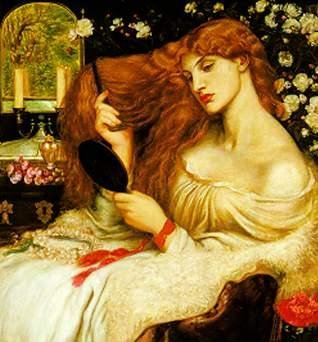
 iconographic evolution of Lilith from the Sumerian reliefs to the biblical writings are characterized by sequential acquisition of characteristics lascivious night and bloody, culminating with the image of the Hebrew Lilith turned into a demon that feeds on the blood of newborns. Lilith's attraction for the blood eventually became their defining trait, and the vampiric imagery of the Middle Ages to the Sumerian goddess assimilated with vampiric beings to the point of being considered the first female vampire. What is the mythological origin of vampires and maintain relationship with Lilith?
 The first references to lewd women who feed on human blood appear in the classical tradition. Harpies relatives, women with bird body and sharp claws to abduct newborn of which we speak to each other Homer, Petronius and Apuleius, we find the striga. Both Ovid (Fasti 6, 131-138) as Petronius (The Satyricon, 63-64) striga we describe the fruit of the union of men and harpies, as winged women with claws of raptors that feed on flesh and blood of newborns. Although the iconography of the striga is very different to the image of Lilith and Lamia Greek, which we have discussed in previous posts, all of them share their lewd character and devouring newborns.
But these bloody things, particularly noteworthy Empusa figure, a female demon associated with the goddess Hecate (Greek goddess of the soul of the dead), who fed on the blood of men after they have been seduced under the guise of straight or fair maiden. Apparently, this Empusa legend was brought to Greece from Palestine, where she was considered a daughter of the Hebrew Lilith with which it shares many similarities. One of the first authors to refer to the Empusa is Aristophanes, who in his work Frogs, presented as a beast with the face on fire that takes many forms, including a beautiful woman who manages to seduce men and feed on blood. Although it will be Flavio Philostratus who, in Life of Apollonius , offers the most detailed the Empusa:
"Once we crossed the Caucasus, say they saw four men who were already black elbows, and other five cubits, they passed the Indus River. On the way up the river found worthy of reference the following: walking under a bright moon and were presented with the appearance of a empusa, which becomes as one thing and another, and disappears. Apolonio said it was, so he began to insult himself empusa and instructed those who were with him to do the same, because this is the remedy against such intrusion. The apparition fled screaming like ghosts. "
In the hands of this author known also to the Empusa of Corinth, which will undoubtedly be a decisive influence in shaping the vampires back as the author pointed out several times Pilar Pedraza. In this sense, refers Philostratus (book 4.25) how Apollonius due to such occurrence. We are told it is Phoenician, lives in a suburb of Corinth and had seduced the young philosopher Menippus of Lycia with those who intend to marry. Attend the wedding, among other guests, Apollonius, who reveals the "good girlfriend is one of the empusa" unmask and does this all go away in an instant:
"When cups of gold and silver showed what appeared to be vain and flew all of their eyes, and pourers, cooks and all the servants of this ilk faded to be rejected by Apollonius, the appearance seemed to lie to mourn and asked not is the tortured or forced her to recognize what it was. By insisting Apollonius and not let it escape, he acknowledged that was a empusa and raged for Menippus pleasures in order to devour her body, used to eat for beautiful bodies and young people because their blood was pure. "
Most of the features that have the harpies, strigose and empusa are inherited from the Hebrew myth of Lilith sees it as a being nocturnal, lewd and devouring of children to the divine curse which condemns it to see hundreds of children die every day. Most historians and anthropologists agree that both the above things as vampires that characterize much of the demonology of the Middle Ages have their origin in the myth of Lilith. Even the medieval concept of race that conceives Cain Cain and his descendants as the first vampire clan that descended from Lilith comes from Jewish iconography of Lilith. Vampire imagery of the Middle Ages, the historical aspects of vampirism and the figure of Vlad Tepes (vayvode of Wallachia who inspired the character Dracula of Bram Stoker's novel) will speak in subsequent entries.


0 comments:
Post a Comment